
Aspire Clinical Education provides bowel care training for support workers, carers, and healthcare professionals responsible for delivering bowel management as part of a client’s care plan.
Bowel management training supports learners to understand bowel function, recognise constipation and bowel complications, and safely support bowel management routines. This may include administration of rectal medications such as suppositories and enemas, and understanding bowel management interventions including digital rectal stimulation and digital removal of faeces (manual evacuation).
Duration: 2-3 Hours
Format: Face to Face Practical Training
Bowel Care Training
PRACTICAL BOWEL MANAGEMENT TRAINING
What The Bowel Care Training Covers
Infection prevention and control measures in bowel care
The digestive system
Functions of the bowel
Food digestion timeline
The Bristol Stool Chart
What affects bowel habits
Why do clients need bowel care?
Constipation, faecal impaction, bowel obstruction
Abdominal massage
Enteral medications used in bowel care
Treatments for diarrhoea
Rectal medications
Positioning for bowel care
Dignity in bowel care
Consent, capacity and right to refuse
Practical: Administration of enemas and suppositories
Practical: Digital rectal examination (DRE)
Practical: Digital rectal stimulation (DRS)
Practical: Digital removal of faeces (DRF) (manual evacuation)
Considerations, issues and complications
Documentation and escalation of concerns
Skin care
Roles and responsibilities
Who This Training is Suitable For
Support workers and carers in complex care packages
Registered nurses working in community settings
School or community-based care teams
Healthcare assistants supporting individuals with epilepsy
Case management teams arranging client specific training
Care providers supporting individuals with seizures
Directly employed care teams needing new or annual refresher training
Families supporting relatives with epilepsy
Understanding Bowel Care
Bowel care refers to the support provided to help individuals maintain healthy bowel function and manage bowel elimination safely and comfortably. Some people require assistance with bowel management due to medical conditions, reduced mobility, neurological disorders, or the use of certain medications.
Effective bowel care training involves understanding normal bowel function, recognising changes in bowel habits, and supporting interventions that may form part of a client’s care plan. This may include promoting healthy bowel routines, monitoring bowel patterns, and supporting prescribed bowel management interventions where required.
Providing bowel care safely and respectfully is essential to maintaining dignity, comfort, and overall wellbeing.
Training such as Medication Administration Training can complement bowel care training when teams are supporting individuals with complex needs. Bowel care training can be tailored into client-centred training to focus on the needs and techniques of individual clients.
-
Bowel care training supports staff to understand bowel function, recognise constipation and bowel complications, and safely support bowel management interventions as part of a care plan.
-
Yes. Training can be tailored to the care needs and clinical considerations of the individual client. This helps ensure the training is relevant to the care team and reflects the environment in which care is delivered.
Relevant care plans may be requested ahead of the session to support preparation where appropriate.
-
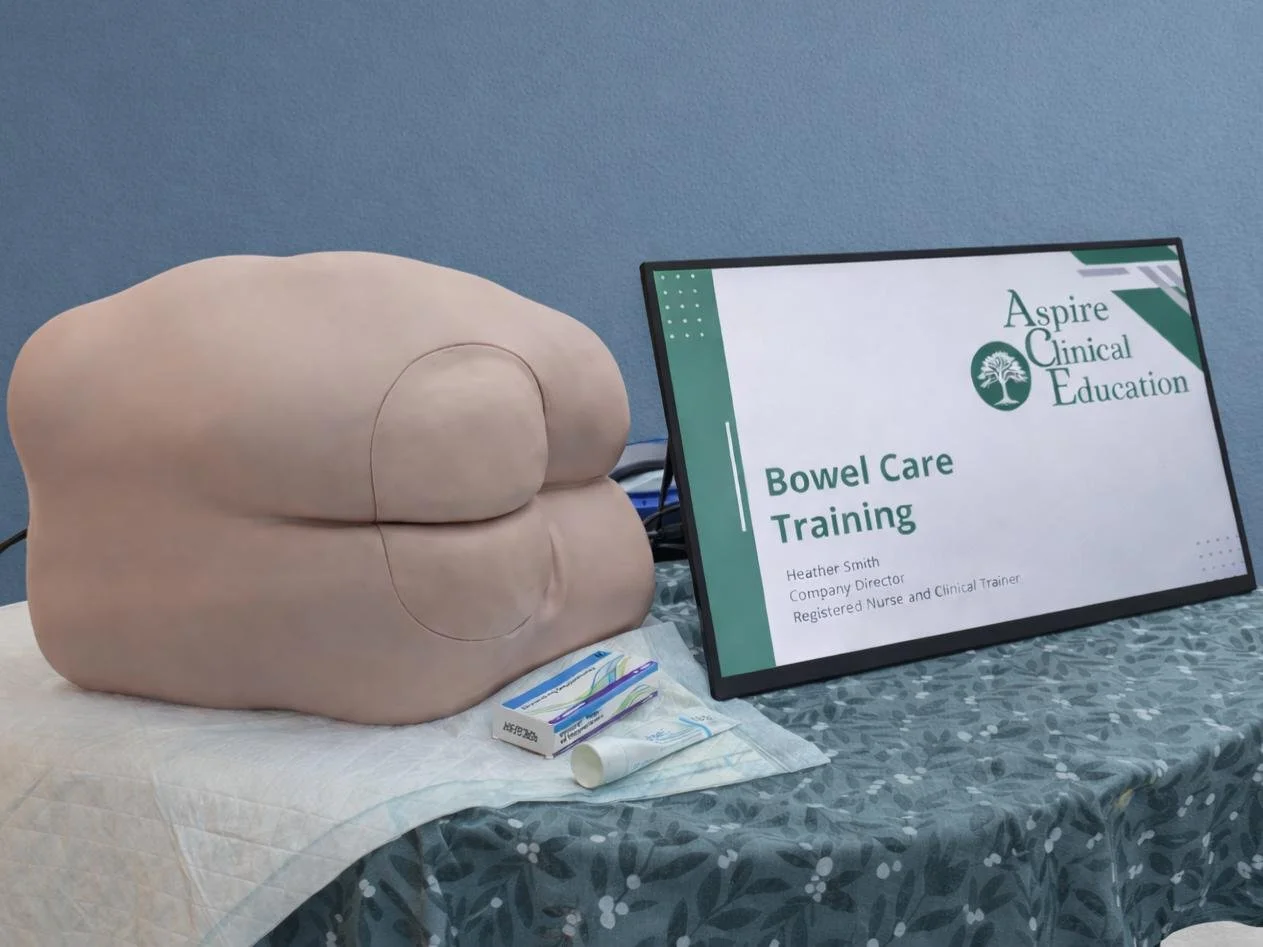
Training focuses on practical understanding to help learners feel confident supporting bowel care safely. This may include demonstrations, practice with the simulation model, discussion of bowel care procedures, and scenario-based learning where appropriate.
-
Where relevant to the care setting, training may include discussion of bowel management interventions such as digital rectal stimulation or digital removal of faeces (manual evacuation) when these are prescribed and included within a client’s care plan.
-
Training can be delivered:
• At the care provider’s premises
• Within community settings
• At a suitable venue organised by the providerDelivery options can be discussed depending on the needs of the organisation and care package.
-
Yes. Learners attending training receive a certificate of attendance.
Bowel Care Training – Frequently Asked Questions
FREQUENTLY ASKED QUESTIONS
Explore Related Training
FACE -TO-FACE · NURSE-LED · SMALL GROUPS

Need training tailored to your team or client?
I offer fully bespoke, client-centred training. I gather information beforehand so every session is completely personalised.
Let’s talk about your bowel care training needs
GET IN TOUCH
Whether you are looking for bespoke training for your team or just want to find out more! I'd love to hear from you.
PHONE


RESPONSE TIME
Usually within 24 hours