
Respiratory Skills Training for Complex Care
PRACTICAL FACE TO FACE RESPIRATORY TRAINING
Aspire delivers a range of complex respiratory skills training. Sessions are highly practical and focus on the equipment, observations and situations that care teams may encounter in everyday care.
Training can be booked as individual topics or delivered as CPD-accredited Respiratory Skills Workshops, where learners receive accredited training materials and all aspects are covered.
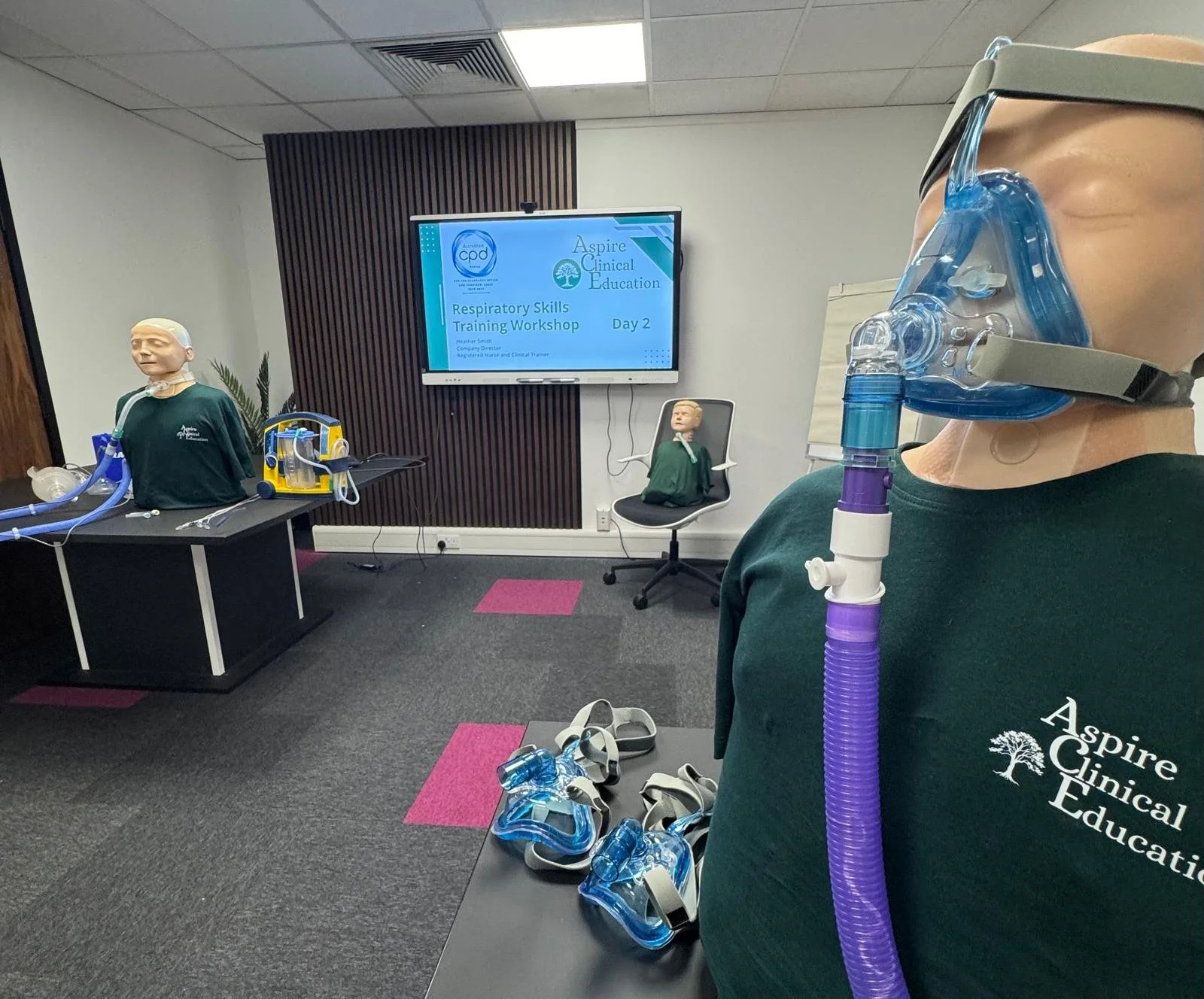
Respiratory Skills Covered:
Tracheostomy Care and Management
Suction Techniques
Ventilation Awareness and Monitoring
Cough Assist (Mechanical insufflation-exsufflation)
Nebuliser Therapy
Safe Use of Oxygen in the Community
Emergency Respiratory Support including use of a Bag Valve Mask (Ambu bag)
Training content can be adapted depending on the equipment used by the individual client and the needs of the care team.
All sessions are highly practical and interactive, sessions are limited to 10 learners to maximise practical participation and engagement.
All respiratory skills training modules include anatomy and physiology of the respiratory system and assessment of breathing.
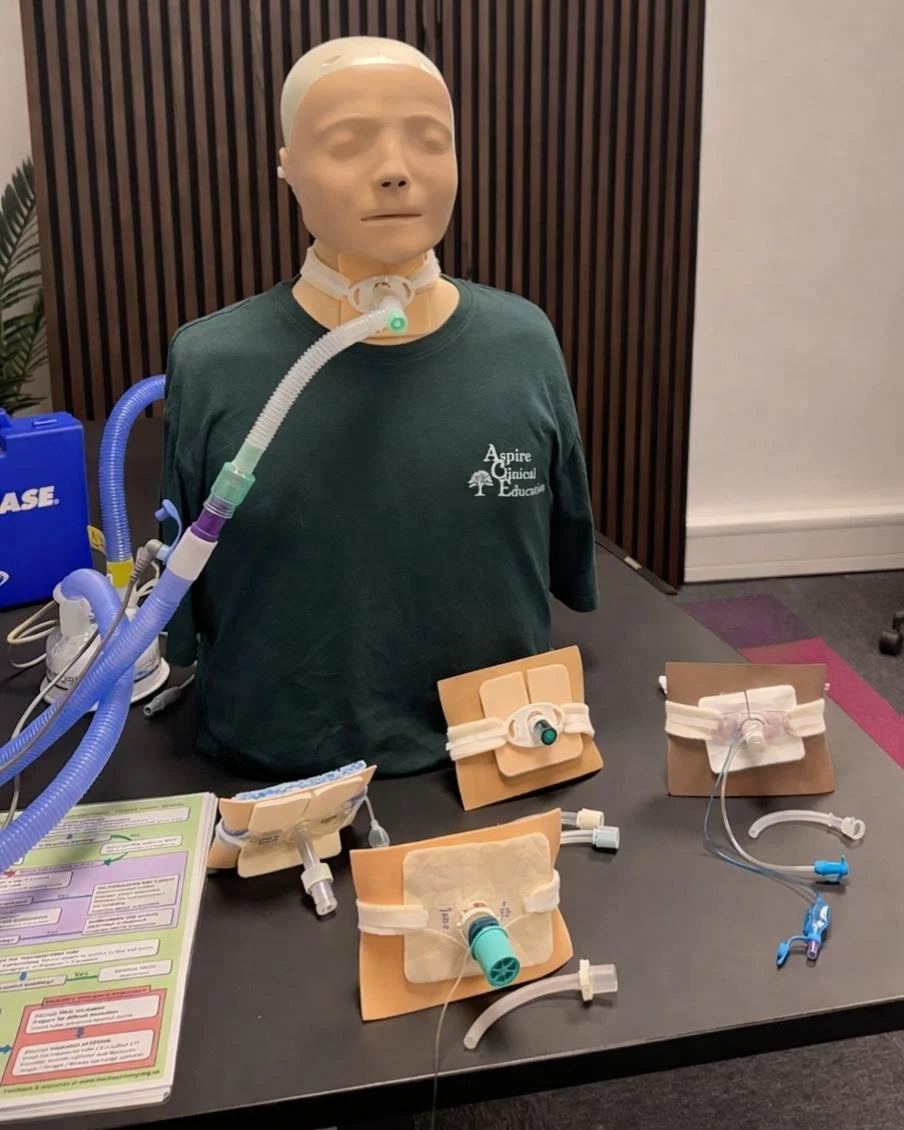
Tracheostomy Care Training
4 Hours
▪ What is a tracheostomy
▪ Indications for tracheostomy
▪ Practical: Types, brands and sizes of tracheostomy tubes
▪ Practical: Fitting, managing and changing an inner cannula
▪ Practical: Changing dressings and tapes.
▪ Care of a tracheostomy stoma.
▪ Practical: Managing a cuffed tracheostomy
▪ Importance of humidification
▪ Communication considerations
▪ Nutritional considerations
▪ Record keeping and documentation
▪ Practical: Tracheostomy tube change
▪ Emergency tracheostomy box contents and uses
▪ Emergency tracheostomy management national guidelines
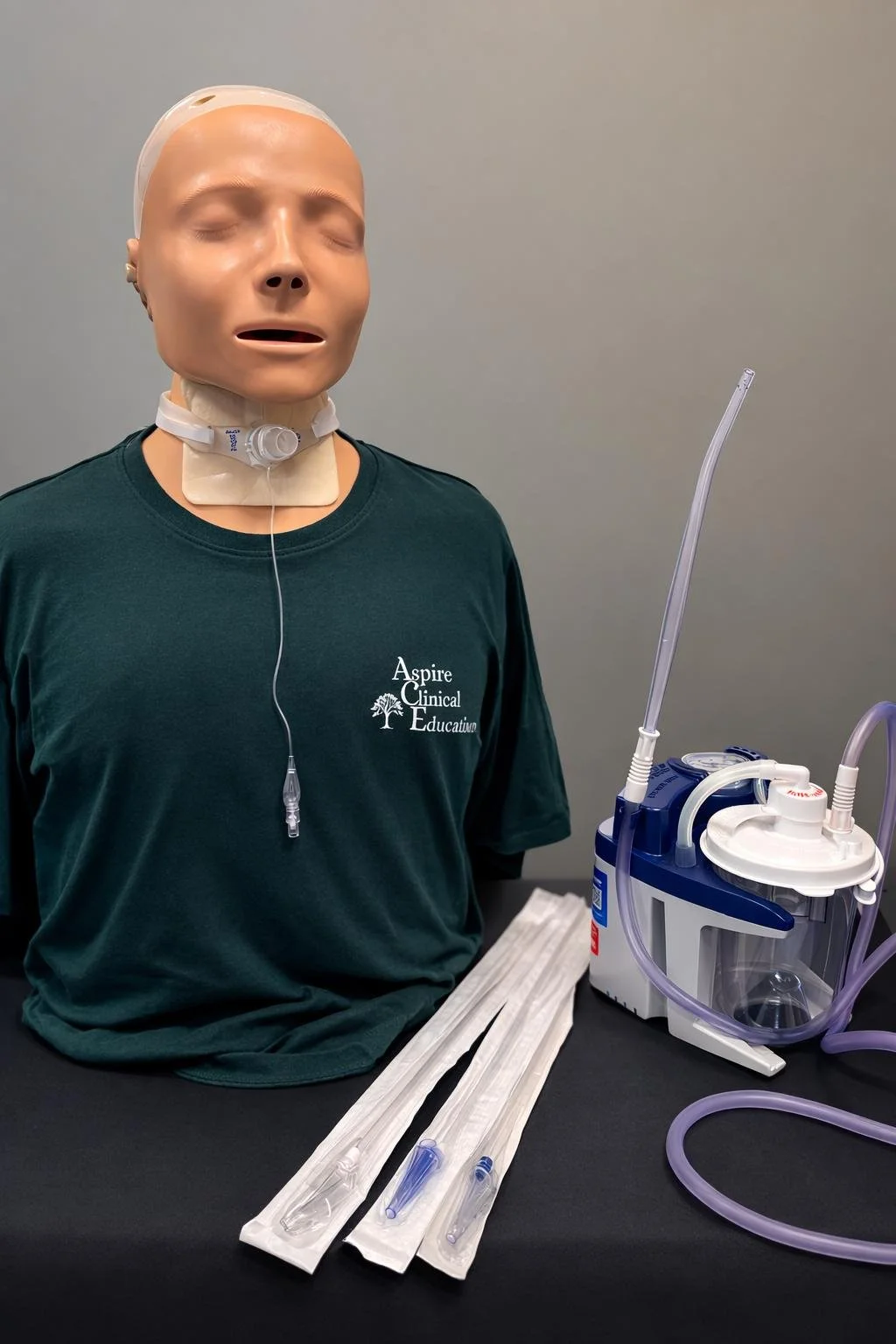
Safe Suction Training
2 Hours
▪ What is suctioning
▪ Indications for suction
▪ Airway devices for suctioning (optional)
▪ Equipment and suction machines
▪ Practical: Set up and use of Laerdal
Suction Unit (LSU) and DeVilbiss VacuAide
▪ Maintenance of a suction machine
▪ Safe suction pressures
▪ Choosing the correct suction catheter
▪ Practical: Yankaeur suction technique
▪ Practical: Deep oral suction / nasal suction technique
▪ Practical: Tracheostomy suction technique
▪ Secretion monitoring and concerns
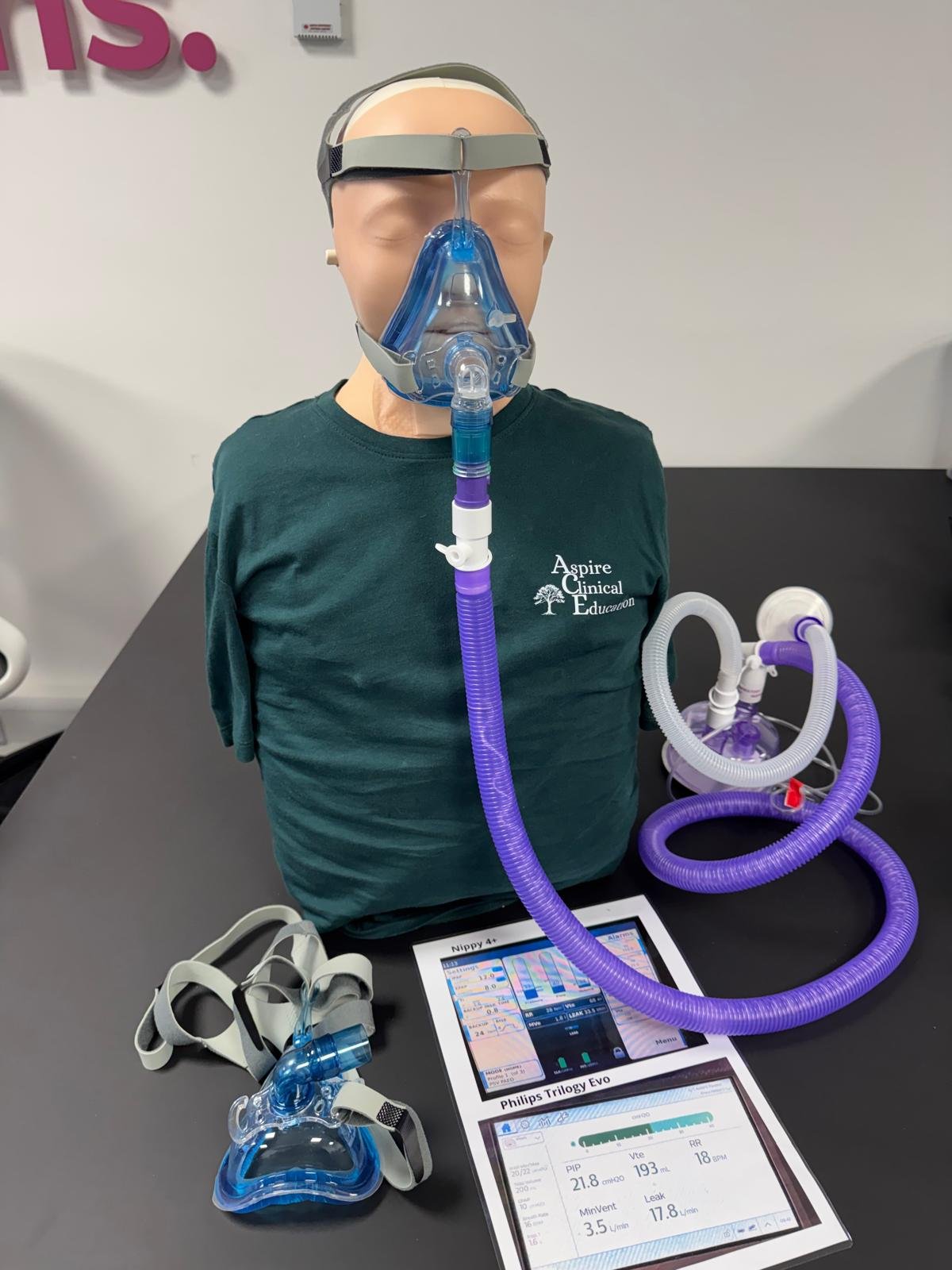
Ventilation Awareness and Monitoring Training
2 Hours
▪ What is a ventilator?
▪ Why do clients need a ventilator?
▪ How does a ventilator work?
▪ Non-Invasive ventilation + Invasive ventilation
▪ Different types of ventilators in the community (Nippy, Philips Trilogy, ResMed)
▪ Practical: How to set up a ventilator wet and dry circuit
▪ Practical: Applying an NIV mask
▪ Maintenance and safety checks
▪ Importance of humidification
▪ Basic ventilation modes
▪ Values in ventilation
▪ Ventilator alarms
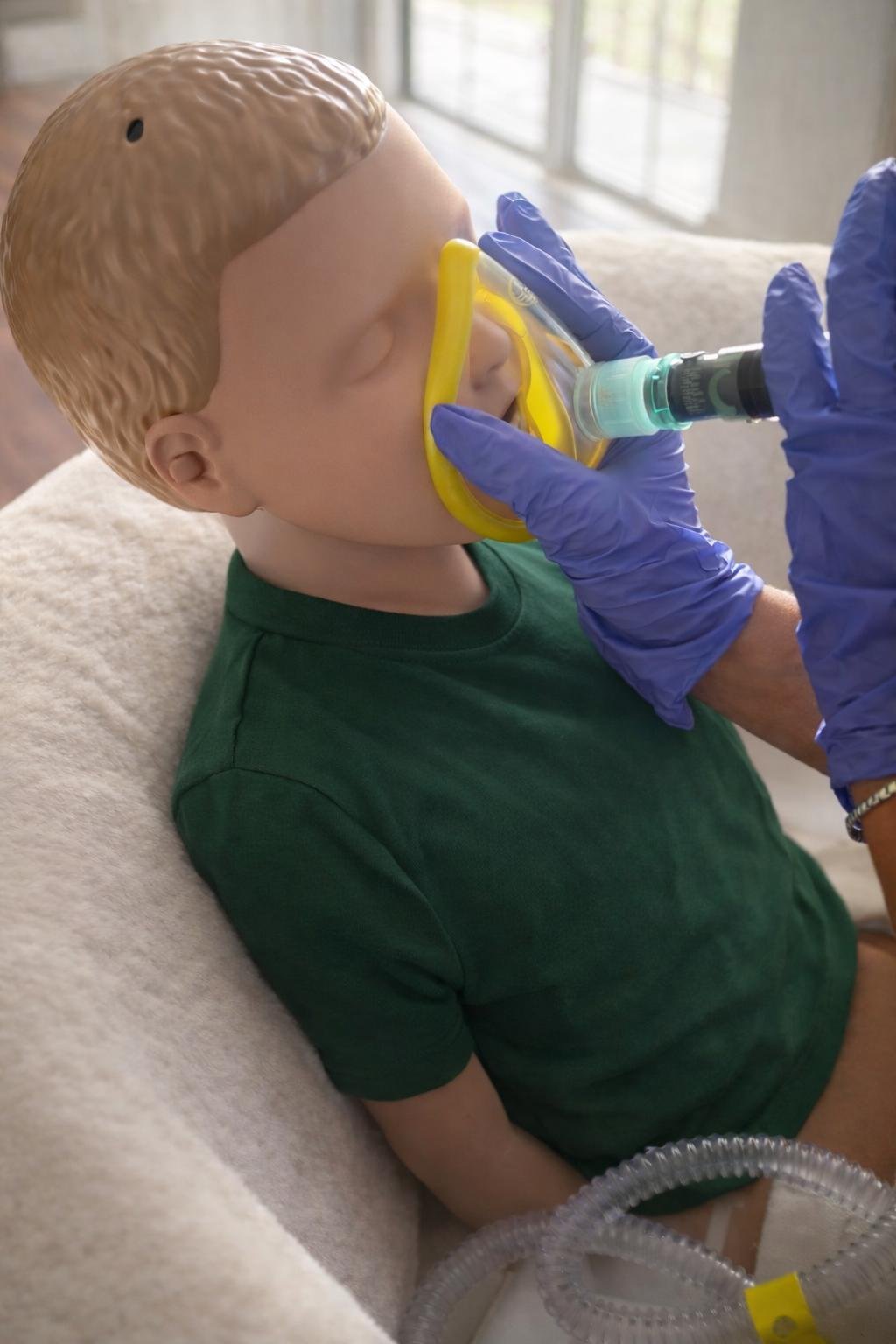
Cough Assist Training
2 Hours
▪ What is a cough?
▪ Causes for coughing
▪ Importance of coughing
▪ Active cycle of breathing
▪ What is cough assist?
▪ Why does a client need cough assist?
▪ Cough assist lung recruitment
▪ Complications and considerations
▪ Different cough assist machines
(Nippy Clearway and Philips E70)▪ Programmes on the cough assist
▪ Maintenance and safety checks
▪ Practical: Performing cough assist safely
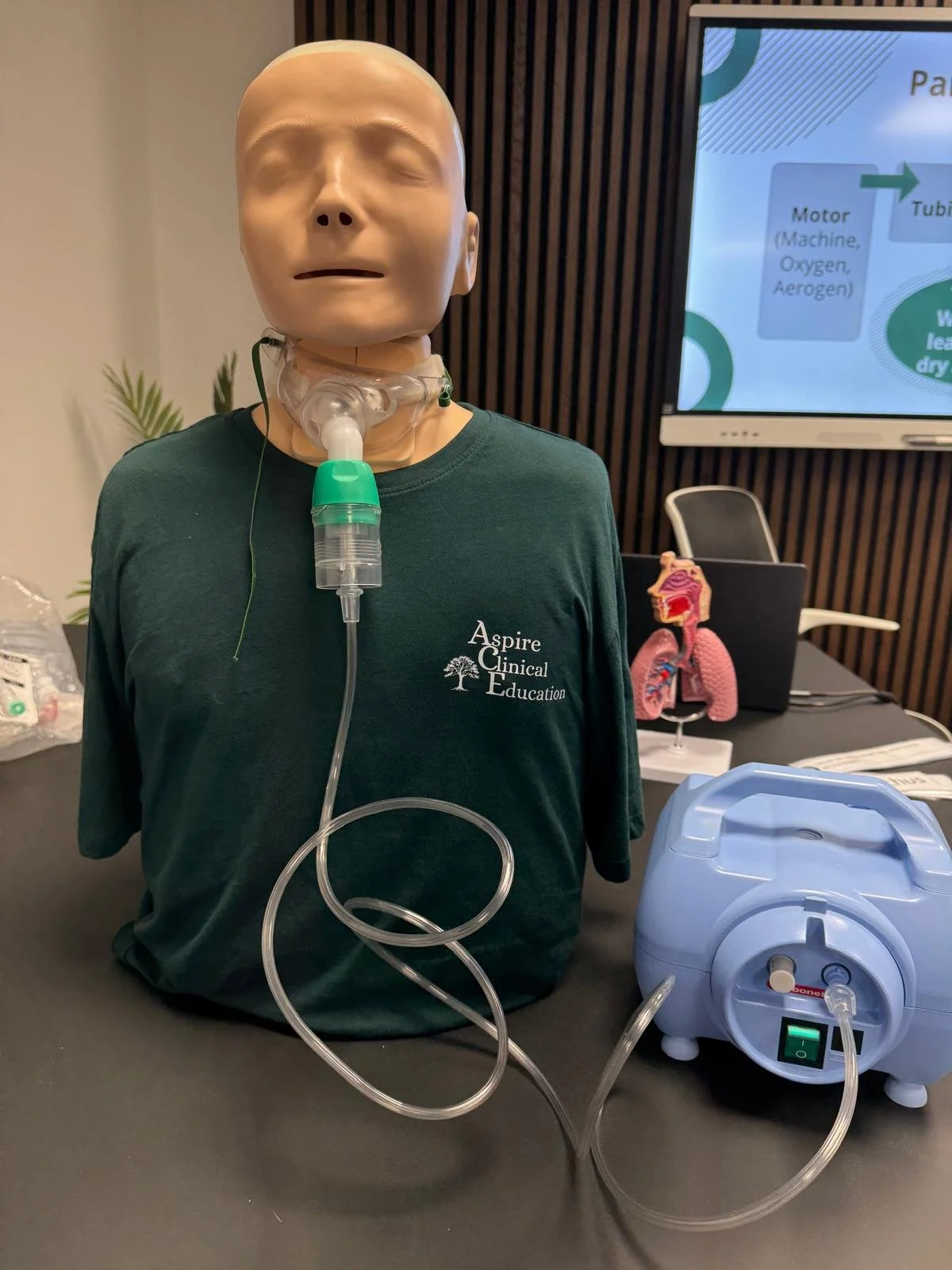
Nebuliser Therapy Training
1 Hour
▪ What is a nebuliser?
▪ Why do clients need a nebuliser?
▪ When do clients need a nebuliser?
▪ Common nebulised medications
▪ Regular and PRN prescriptions
▪ Practical: How to set up a nebuliser
▪ Maintenance
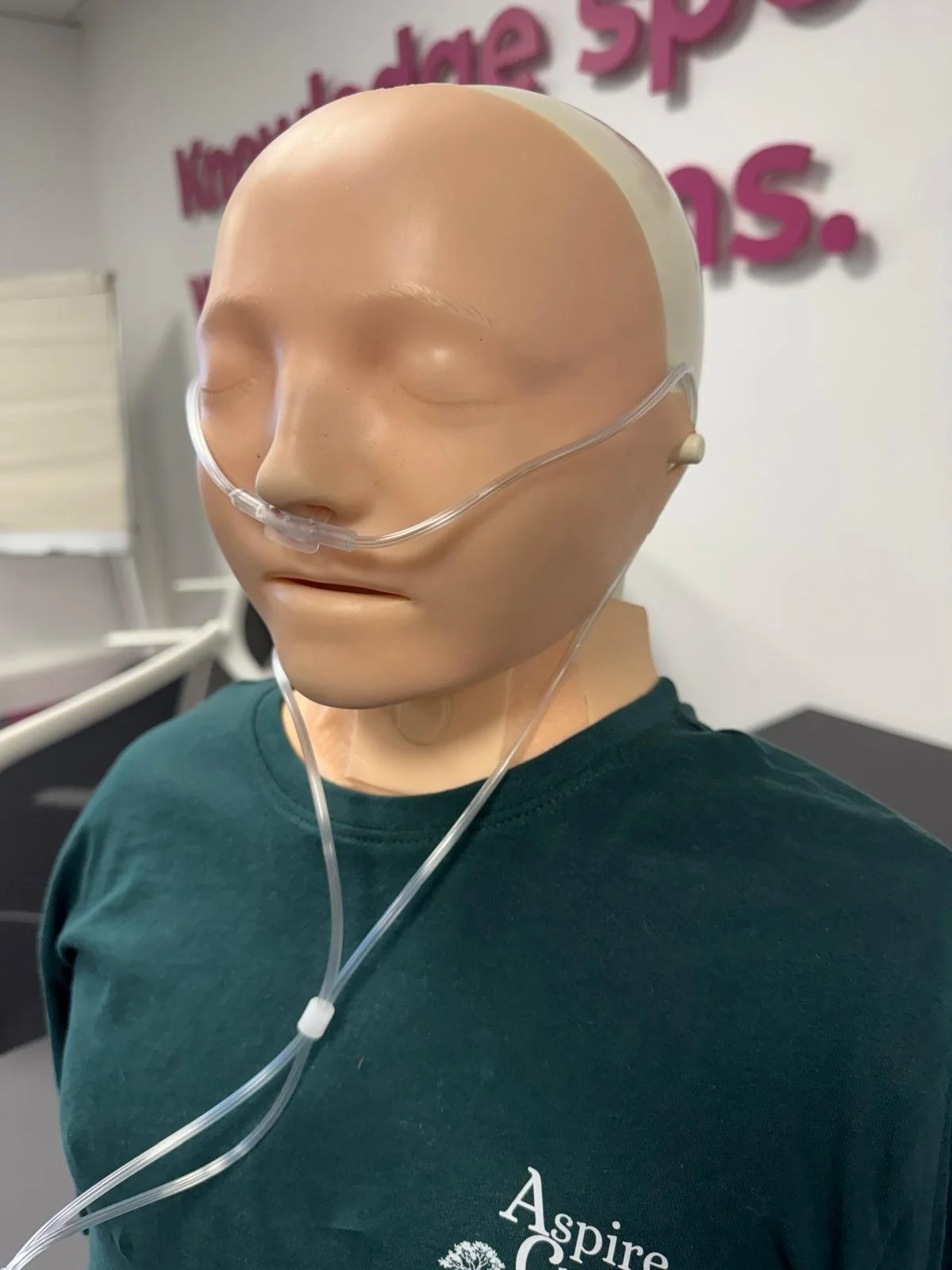
Safe use of Oxygen in the Community Training
1-2 Hours
▪ What is oxygen?
▪ Composition of the air
▪ Oxygen saturation parameters
▪ How much oxygen to administer, importance of care plans
▪ Practical: Oxygen delivery systems
▪ Oxygen cylinders
▪ Oxygen concentrators
▪ Practical: Monitoring oxygen levels
and respiratory rate
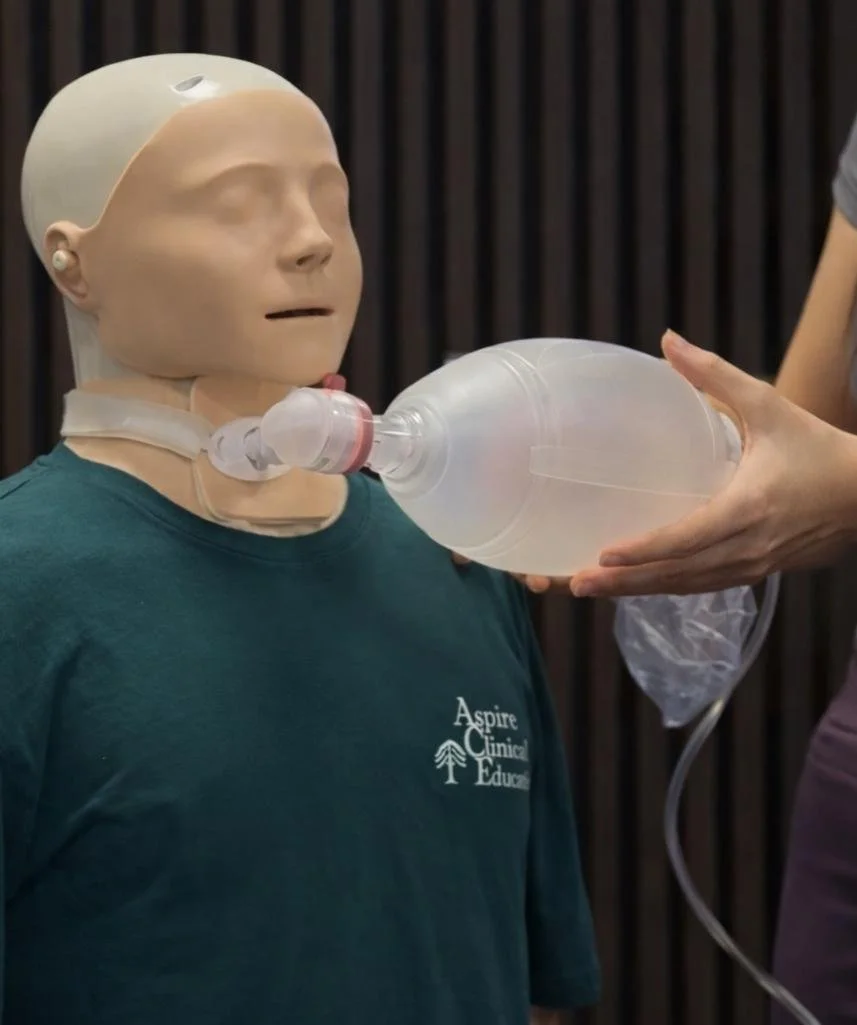
Emergency Respiratory Support Training(Use of Ambu-Bag/ Bag Valve Mask)
1 Hour
▪ Abnormal breathing
▪ Recognising respiratory emergency
▪ Treatments for respiratory emergency and escalation
▪ Practical: Manual ventilation – use of bag valve mask (Ambu-bag)
▪ Debrief after acute episode
▪ Documentation and incident reporting
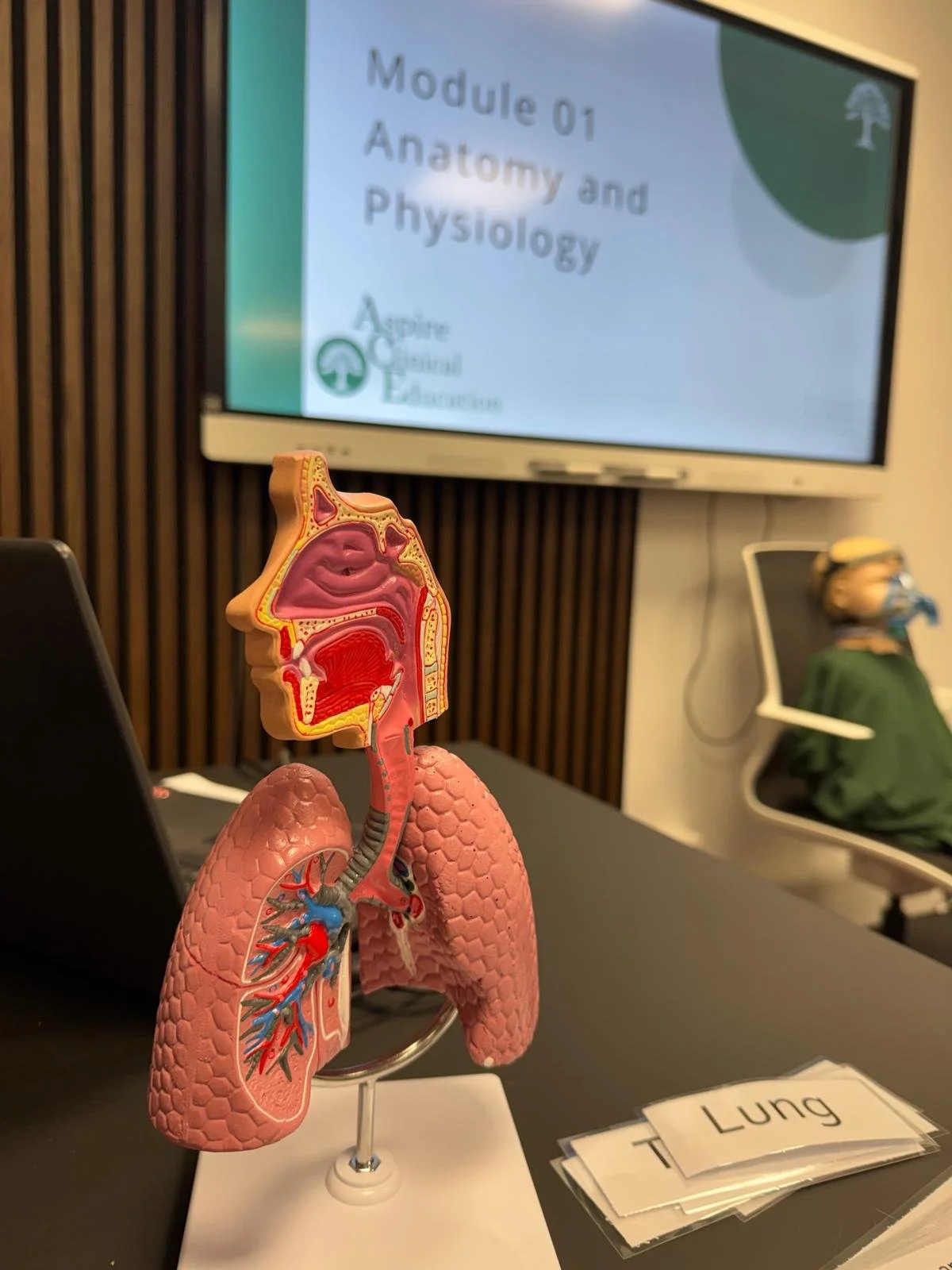
Respiratory Anatomy and Physiology Training
All respiratory skills include this section
▪ Practical: The respiratory system
▪ Assessing breathing
▪ Abnormal breathing
▪ Practical: How does it feel?
▪ ABC approach
Who This Training Is Suitable For
• Support workers and carers working within complex care packages
• Registered nurses working in community or home care settings
• School-based or community care teams supporting individuals with healthcare needs
• Healthcare assistants involved in complex respiratory care
• Case management teams arranging client-specific training
• Care providers supporting individuals with tracheostomies or respiratory conditions
• Directly employed care teams requiring new or refresher training
• Families supporting relatives with a tracheostomy
Training is delivered to organisations and care teams supporting individuals with respiratory support in community, home care and complex care settings across Yorkshire and the UK.
FREQUENTLY ASKED QUESTIONS
Respiratory Skills Training Frequently Asked Questions
-
Yes. Training can be tailored to the equipment, care needs and clinical considerations of the individual client. This helps ensure the training is relevant to the care team and reflects the environment in which care is delivered.
Relevant care plans may be requested ahead of the session to support preparation where appropriate.
-
Yes. Individual topics can be booked as stand-alone training sessions or in a bespoke needs combination package if a team requires support with a specific skill set.
-
Yes. Sessions are designed to be highly practical and focus on the equipment and situations care teams may encounter when supporting individuals with respiratory needs.
Where possible, training may include demonstrations and discussion of the equipment used within the care package.
-
Training can be delivered:
• At the care provider’s premises
• Within community settings
• At a suitable venue organised by the providerDelivery options can be discussed depending on the needs of the organisation and care package.
-
Yes. Learners attending training receive a certificate of attendance, and those attending the accredited workshop receive a CPD certificate.
-
No. Training forms the first part of the competency process.
Explore Related Training
FACE -TO-FACE · NURSE-LED · SMALL GROUPS

Need training tailored to your team or client?
I offer fully bespoke, client-centred training. I gather information beforehand so every session is completely personalised.
Let’s talk about your respiratory training needs
GET IN TOUCH
Whether you're booking a place on an open course, looking for bespoke training for your team, or just want to find out more! I'd love to hear from you.
PHONE

RESPONSE TIME
Usually within 24 hours