
Safe suctioning is an important skill in many complex care packages. This practical training supports nurses, carers, support workers and other healthcare professionals to recognise when suction is needed, use equipment safely and respond appropriately in community, home care and complex care settings.
Sessions can be delivered as stand-alone suctioning training or as part of a wider complex respiratory skills workshop.
Duration: 2 Hours
Format: Face to Face Practical Training
Suction Training
PRACTICAL SUCTIONING TRAINING
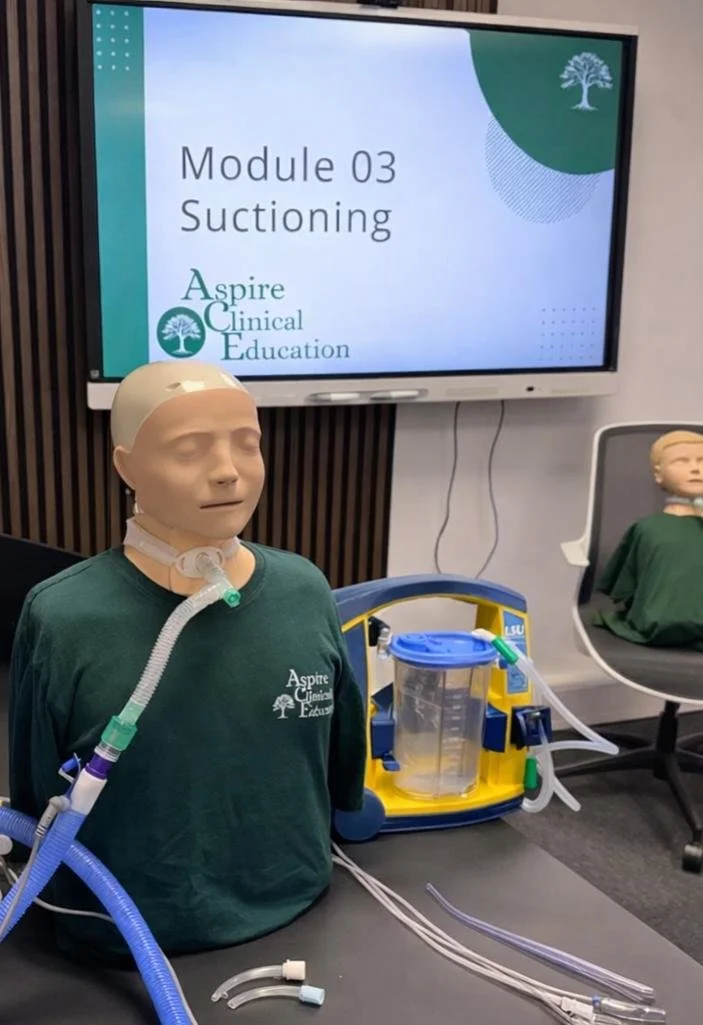
What This Suction Training Covers
Infection control
What is suctioning
Indications for suction
Airway devices for suctioning (optional)
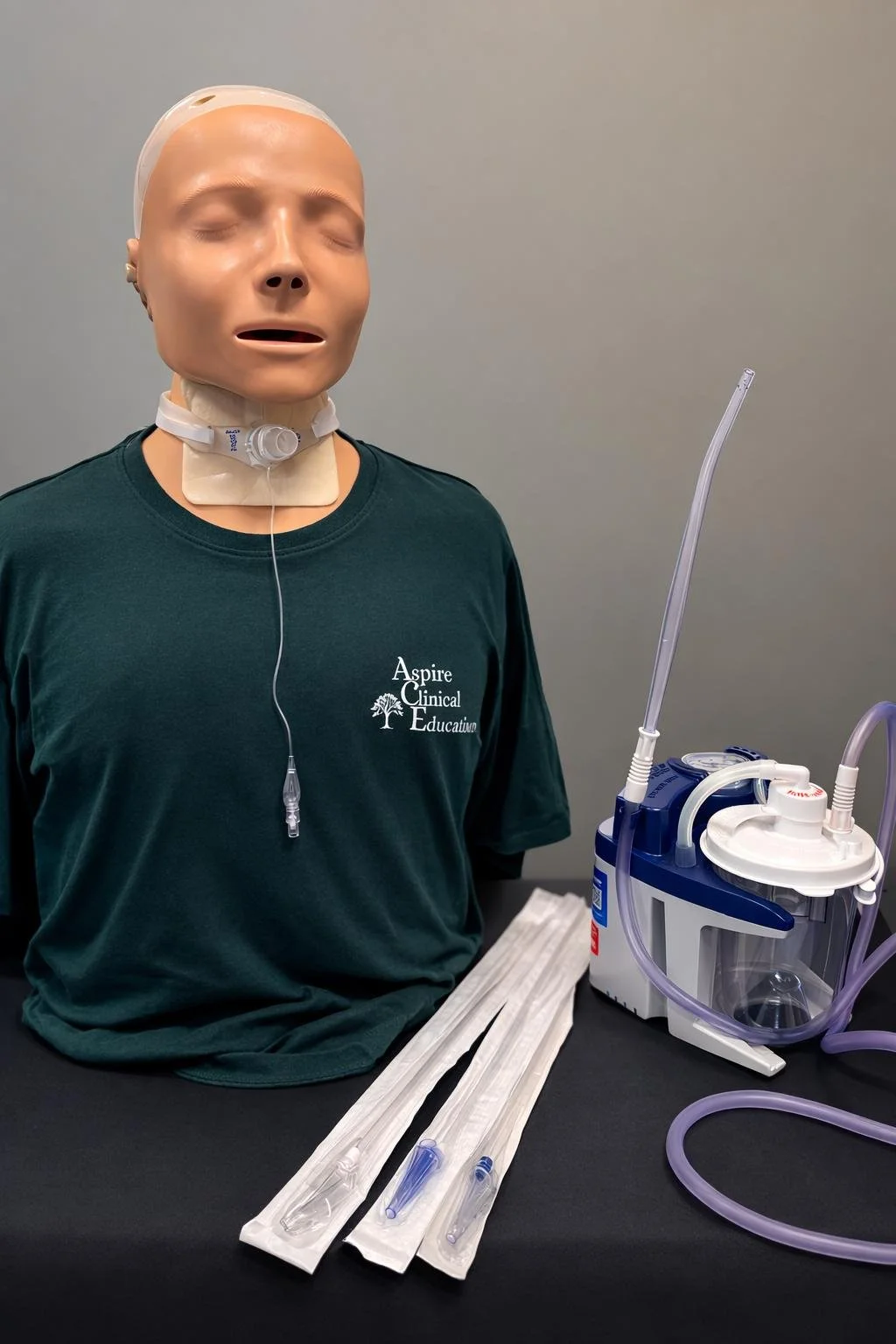
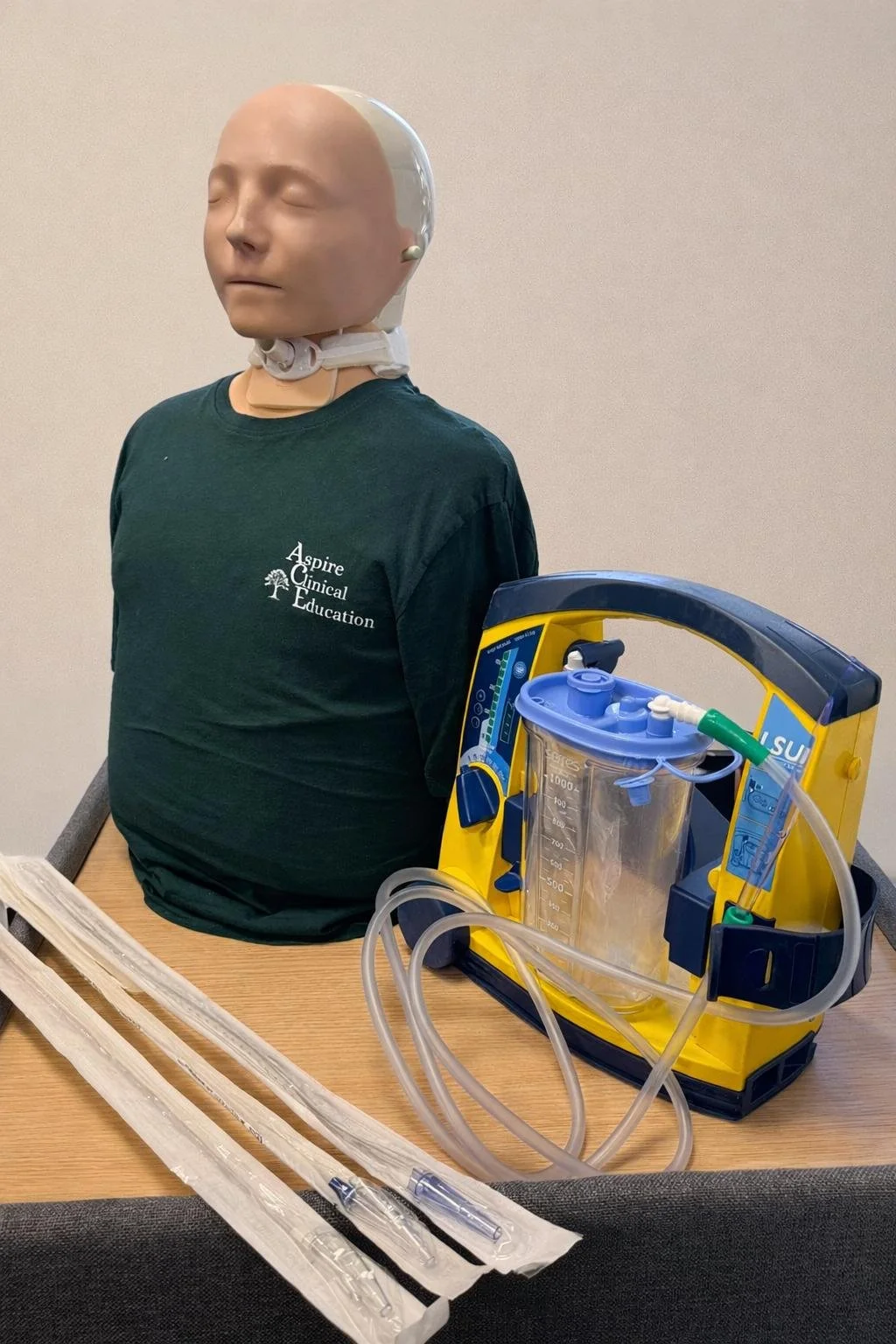
Equipment and suction machines
Practical: Set up and use of Laerdal Suction Unit (LSU)
Practical: Set up and use of DeVilbiss Vacu-Aide suction machine
Maintenance of a suction machine
Safe suction pressures
Choosing the correct catheter
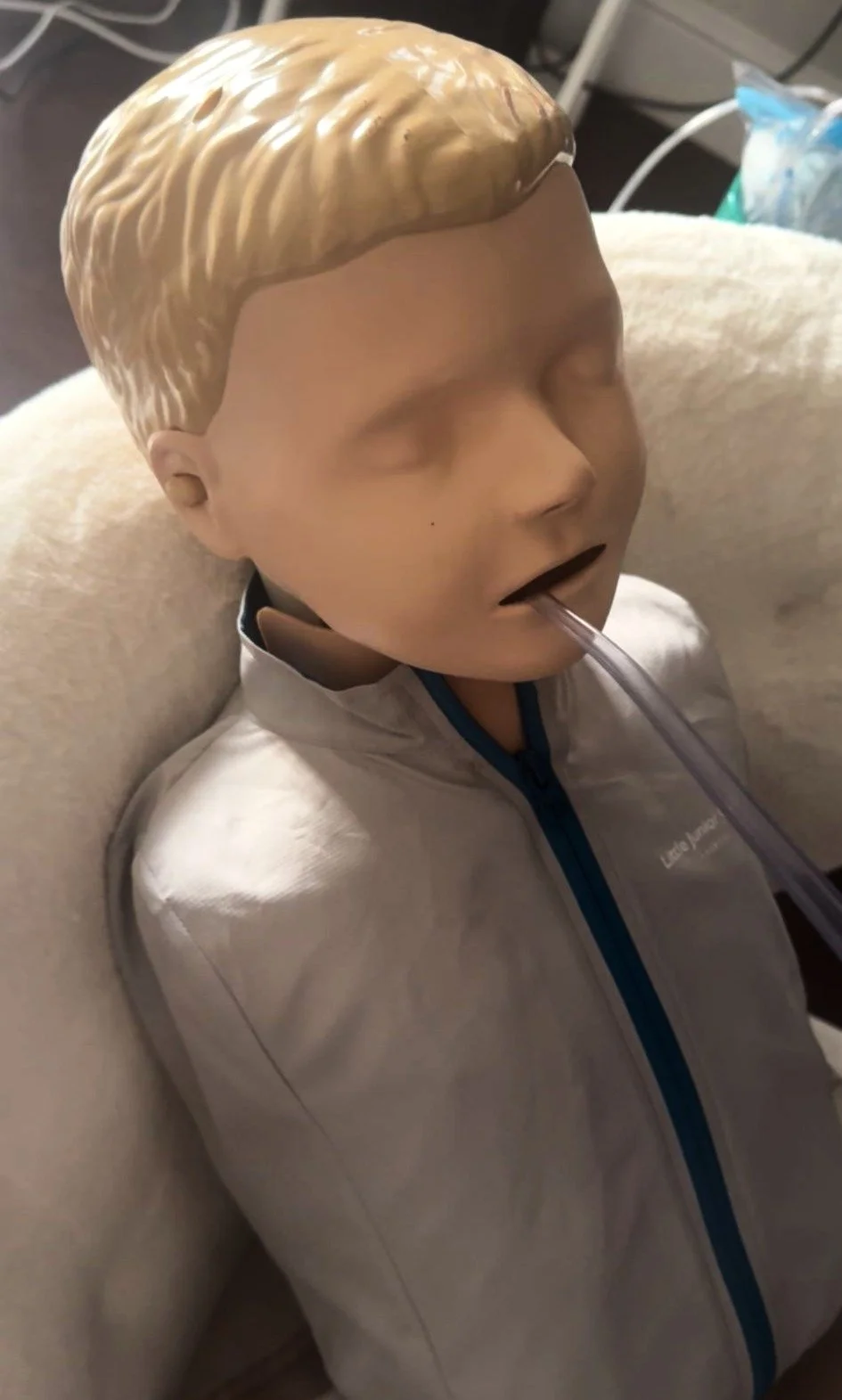
Practical: Yankaeur suction
Practical: Deep oral suction / deep nasal suction
Practical: Tracheostomy suction
Secretions monitoring and escalation
Who This Training Is Suitable For
• Support workers and carers working within complex care packages
• Registered nurses working in community or home care settings
• School-based or community care teams supporting individuals with healthcare needs
• Healthcare assistants supporting individuals with respiratory needs
• Case management teams arranging client-specific training
• Care providers supporting individuals with a suction machine
• Directly employed care teams requiring new or refresher training
• Families supporting relatives who require suctioning
Training is delivered to organisations and care teams supporting individuals with suction machines in community, home care and complex care settings across Yorkshire and the UK.
Understanding Suctioning in Complex Care
Suctioning is a procedure used to remove secretions from the airway when a person is unable to clear them independently. In complex care settings this is commonly required for individuals with a tracheostomy, reduced cough reflex, neurological conditions, or respiratory weakness.
Effective suctioning helps maintain a clear airway, supports breathing and reduces the risk of complications such as infection, aspiration or respiratory distress. However, it must be carried out using the correct equipment, technique and infection control procedures to ensure safety.
Within community and home care environments, suction may be required via a tracheostomy, nasally or orally using a Yankauer suction catheter to remove secretions from the mouth and upper airway.
Training focuses on helping healthcare professionals recognise when suction is required, carry out the procedure safely and respond appropriately to concerns or deterioration.
Training such as tracheostomy care training or cough assist training may be applicable when teams are supporting individuals with suctioning. The Respiratory Skills Training Workshops encompass all associated cares with suctioning to give learners a comprehensive understanding of this complex care skill.
-
Training may include oral suction using a Yankauer suction catheter, deep oral suction, nasopharyngeal suctioning, tracheal suction via tracheostomy, depending on the needs of the organisation or client.
-
Suction training can be suitable for nurses, carers, support workers, healthcare assistants, community teams and other healthcare professionals involved in supporting individuals with a suction machine in the community.
-
Yes. Training can be tailored to the care needs and clinical considerations of the individual client. This helps ensure the training is relevant to the care team and reflects the environment in which care is delivered.
Relevant care plans may be requested ahead of the session to support preparation where appropriate.
-
Yes. Aspire Clinical Education training focuses on practical understanding and hands on learning with access to both types of community suction machines.
-
Training can be delivered:
• At the care provider’s premises
• Within community settings
• At a suitable venue organised by the providerDelivery options can be discussed depending on the needs of the organisation and care package.
-
Yes. Learners attending training receive a certificate of attendance. If the learner attended the Respiratory Skills Training Workshop, an accredited CPD certified certificate is awarded.
Suction Training – Frequently Asked Questions
FREQUENTLY ASKED QUESTIONS
Explore Related Training
FACE -TO-FACE · NURSE-LED · SMALL GROUPS

Need training tailored to your team or client?
I offer fully bespoke, client-centred training. I gather information beforehand so every session is completely personalised.
Let’s talk about your suctioning training needs
GET IN TOUCH
Whether you're booking a place on an open workshop, looking for bespoke training for your team, or just want to find out more! I'd love to hear from you.
PHONE

RESPONSE TIME
Usually within 24 hours