
PRACTICAL VENTILATION TRAINING
Ventilation Training
This highly practical ventilation training helps nurses, carers, support workers and healthcare professionals develop the knowledge, practical skills and confidence needed to safely support individuals requiring ventilation in community and complex care settings.
Training focuses on safe ventilation support, equipment awareness, routine safety checks, recognising deterioration and responding appropriately to respiratory concerns.
Sessions can be delivered as stand-alone ventilator training or as part of a wider complex respiratory skills workshop.
Duration: 2 Hours
Format: Face to Face Practical Training
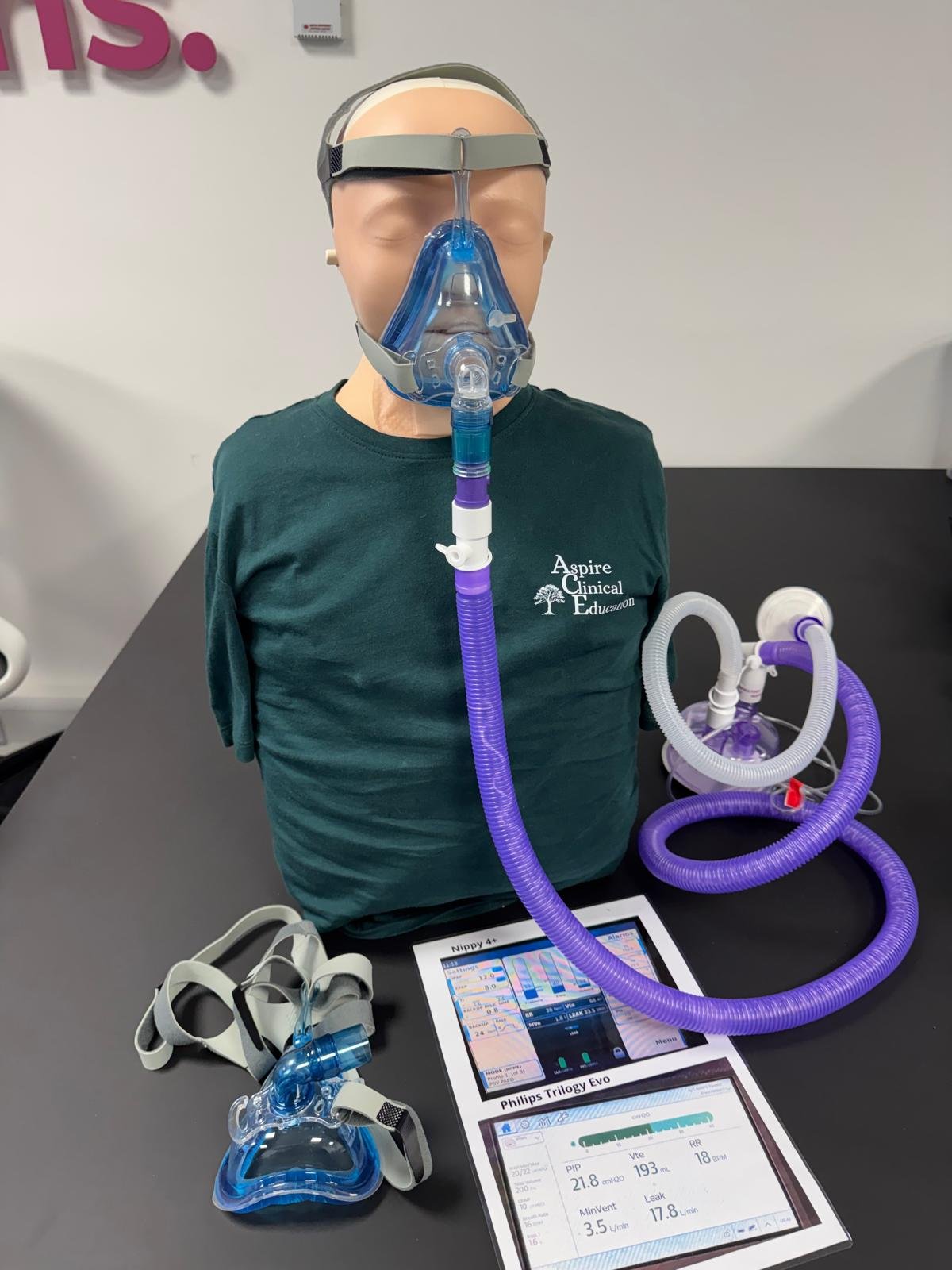
What This Ventilation Training Covers
What is a ventilator?
Why do clients need a ventilator?
How does a ventilator work?
Non-Invasive ventilation + Invasive ventilation
Different types of ventilators (Nippy, Philips Trilogy, ResMed)
Practical: How to set up a ventilator
Practical: Applying an NIV mask
Maintenance and safety checks
Importance of humidification
Basic ventilation modes (CPAP, BIPAP, PSV, S/T)
Values in ventilation
Ventilator alarms
Considerations in ventilator use
Roles and responsibilities
Documentation and record keeping
Who This Training Is Suitable For
• Support workers and carers working within complex care packages
• Registered nurses working in community or home care settings
• School-based or community care teams supporting individuals with healthcare needs
• Healthcare assistants involved in ventilation care
• Case management teams arranging client-specific training
• Care providers supporting individuals with a ventilator
• Directly employed care teams requiring new or refresher training
• Families supporting relatives with a ventilator
Training is delivered to organisations and care teams supporting individuals with ventilators in community, home care and complex care settings across Yorkshire and the UK.
Understanding Ventilation in Complex Care
Ventilation is used to support breathing when an individual is unable to maintain effective respiratory function independently. In community and complex care settings, this may involve different types of ventilatory support and specialised equipment that require trained carers and healthcare professionals to provide safe, consistent care.
Supporting someone who requires ventilation involves more than simply operating equipment. It requires an understanding of the individual’s respiratory needs, routine safety checks, recognising signs of deterioration and knowing when concerns should be escalated.
Ventilation equipment may include different types of ventilators and respiratory support devices used within the home or community setting, which carers and healthcare professionals need to understand in order to provide safe and effective support.
Practical ventilation training helps nurses, carers and healthcare professionals build confidence in supporting ventilation safely within the home or community environment, while ensuring the individual’s respiratory needs are monitored and managed appropriately.
This training provides a practical overview of ventilation equipment, common settings and routine safety checks relevant to community care. It does not provide advanced ventilator management or device programming and should always be used alongside local policies, clinical guidance and manufacturer instructions.
Training such as tracheostomy care training may be applicable when teams are supporting individuals with ventilation. The Respiratory Skills Training Workshops encompass all associated cares with ventilation to give learners a comprehensive understanding of this complex care skill.
-
Ventilation training can include the principles of ventilation, equipment awareness, safety checks, alarm response, troubleshooting, recognising deterioration, escalation procedures and practical application relevant to the individual being supported.
-
Ventilation training can be suitable for nurses, carers, support workers, healthcare assistants, community teams and other healthcare professionals involved in supporting individuals with ventilation needs in the community.
-
Yes. Training can be tailored to the care needs and clinical considerations of the individual client. This helps ensure the training is relevant to the care team and reflects the environment in which care is delivered.
Relevant care plans may be requested ahead of the session to support preparation where appropriate.
-
Yes. Aspire Clinical Education training focuses on practical understanding and real-life scenarios to help learners feel confident caring for clients on a ventilator.
-
Training can be delivered:
• At the care provider’s premises
• Within community settings
• At a suitable venue organised by the providerDelivery options can be discussed depending on the needs of the organisation and care package.
-
Yes. Learners attending training receive a certificate of attendance. If the learner attended the Respiratory Skills Training Workshop, an accredited CPD certified certificate is awarded.
Ventilation Training – Frequently Asked Questions
FREQUENTLY ASKED QUESTIONS
Explore Related Training
FACE -TO-FACE · NURSE-LED · SMALL GROUPS

Need training tailored to your team or client?
I offer fully bespoke, client-centred training. I gather information beforehand so every session is completely personalised.
Let’s talk about your ventilation training needs
GET IN TOUCH
Whether you're booking a place on an open workshop, looking for bespoke training for your team, or just want to find out more! I'd love to hear from you.
PHONE


RESPONSE TIME
Usually within 24 hours