
Aspire Clinical Education provides stoma care training for nurses, carers and support teams who support individuals living with a colostomy, ileostomy or urostomy. Training focuses on safe stoma management, hygiene, appliance care, skin integrity, monitoring output and recognising when concerns should be escalated.
Duration: 2-3 Hours
Format: Face to Face Practical Training
Stoma Care Training
PRACTICAL STOMA CARE TRAINING
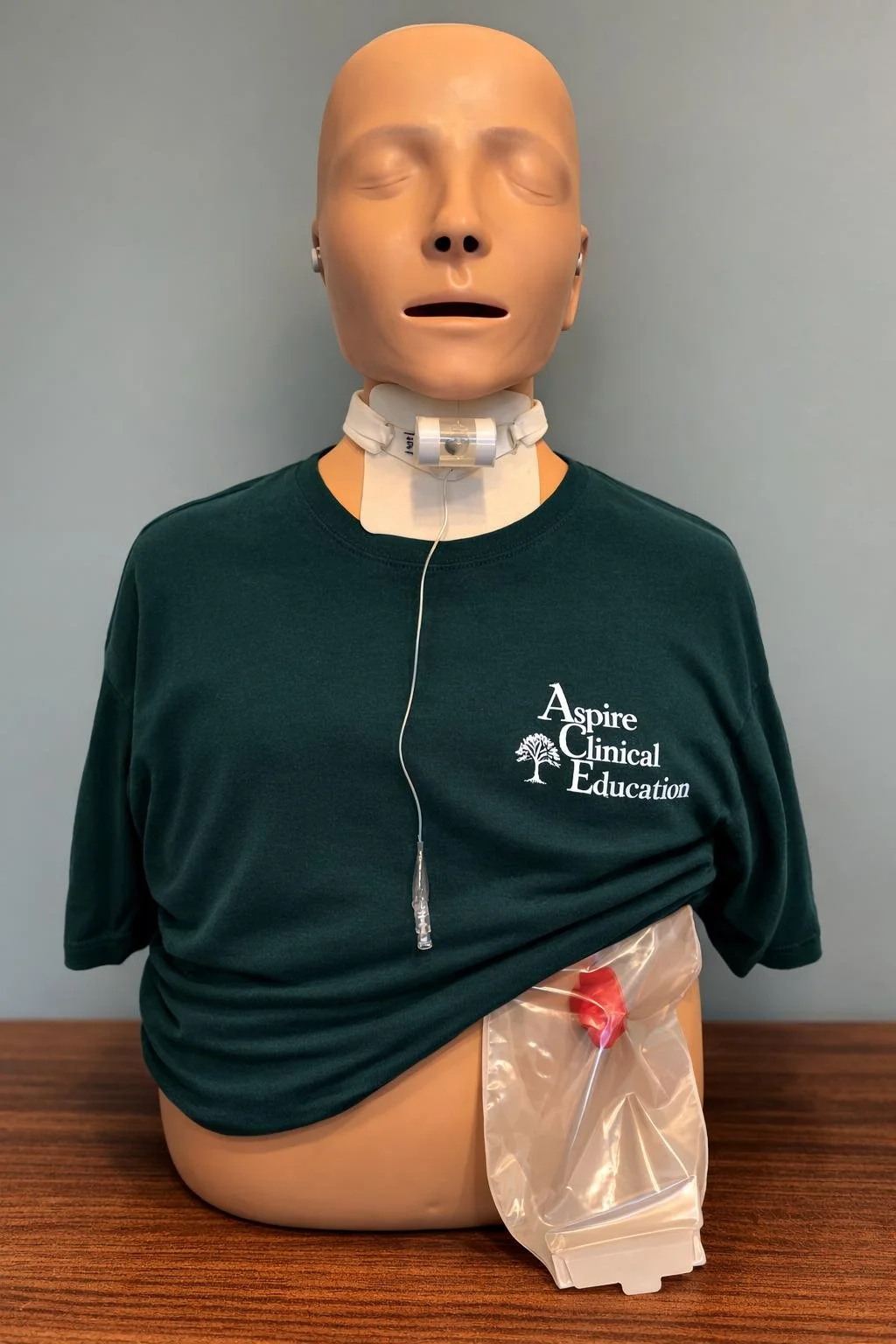
What The Stoma Care Training Covers
Infection prevention and control measures in stoma care
The digestive system
Functions of the bowel or bladder
Food digestion timeline
The Bristol stool chart
What affects bowel habits
Colostomy care
Ileostomy care
Urostomy care (if relevant)
Normal stoma appearance
Practical: Application ofstoma bags
Practical: Routine stoma care
Skin care considerations
Considerations, issues and complications
Observations and monitoring
Dignity in stoma care
Consent, capacity and right to refuse
Documentation and escalation
Roles and responsibilities
Who This Training is Suitable For
Support workers, healthcare assistants and carers
Registered nurses
School or community-based care teams
Case management teams arranging client specific training
CQC Care providers supporting individuals with stomas
Directly employed care teams needing new or annual refresher training
Families supporting relatives with stomas
Understanding Stoma Care
A stoma is a surgically created opening on the abdomen that allows waste to leave the body when the bowel or urinary system cannot function normally. The stoma is connected to the intestine or urinary system and waste is collected in a stoma appliance (bag).
Individuals may have a stoma following surgery for a variety of reasons, including bowel disease, cancer, injury or other medical conditions. Depending on the type of surgery, a stoma may be temporary or permanent.
Supporting someone with a stoma requires an understanding of safe hygiene practices, appliance management, skin care and observation of any changes that may require escalation.
Common types of stoma include:
Colostomy – formed from the large intestine (colon)
Ileostomy – formed from the small intestine (ileum)
Urostomy – formed to divert urine when the bladder cannot function normally
Each type of stoma has different characteristics and care considerations, and training helps ensure staff understand how to safely support individuals with their stoma care.
Stoma care training can also be delivered as part of client-centred training, allowing sessions to focus on the specific needs, care plans, and techniques required to support individual clients.
-
Yes. Training can be delivered to include one or more types of stoma depending on the needs of the learners or client.
-
Yes. Training can be tailored to the care needs and clinical considerations of the individual client. This helps ensure the training is relevant to the care team and reflects the environment in which care is delivered.
Relevant care plans may be requested ahead of the session to support preparation where appropriate.
-
Training focuses on practical understanding to help learners feel confident performing stoma care. Learners can practice routine care for stomas in simulation.
-
Training can be delivered:
• At the care provider’s premises
• Within community settings
• At a suitable venue organised by the providerDelivery options can be discussed depending on the needs of the organisation and care package.
-
Yes. Learners attending training receive a certificate of attendance.
-
Yes. Stoma care training is suitable for teams working in community, home care and other care settings, depending on the needs of the service.
Stoma Care Training – Frequently Asked Questions
FREQUENTLY ASKED QUESTIONS
Explore Related Training
FACE -TO-FACE · NURSE-LED · SMALL GROUPS

Need training tailored to your team or client?
I offer fully bespoke, client-centred training. I gather information beforehand so every session is completely personalised.
Let’s talk about your stoma care training needs
GET IN TOUCH
Whether you are looking for bespoke training for your team or just want to find out more! I'd love to hear from you.
PHONE


RESPONSE TIME
Usually within 24 hours